IRI Home

Overview of ENSO Impacts

What are ENSO impacts?
Why do we care about ENSO impacts?
What do we need to know about ENSO impacts?

What are ENSO impacts?

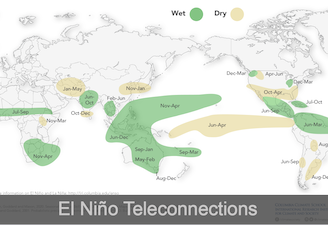
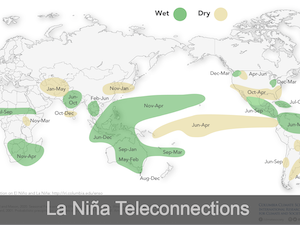
ENSO impacts are the effects (both positive and negative) of El Niño- and La Niña-related climate conditions on society and the environment. ENSO, which is centered in the Pacific Ocean, makes some climate conditions more likely to happen during El Niño events or during La Niña events than at other times. By making those climate conditions more likely, ENSO also makes the societal and environmental effects of these conditions more likely.

Perhaps the most famous impacts of El Niño events are:
  • The damages from floods and landslides caused by very high rainfall in Peru and southern California
  • The forest fires in Indonesia that have caused serious air pollution problems
  • The crop failures and sometimes famine from droughts in southern Africa
  • The collapse of the Peruvian anchovetta fisheries because of warmer coastal waters.
But ENSO events (in particular to the strong El Niño events of 1982–83 and 1997–98) have been connected to impacts on almost every aspect of human life: disease outbreaks, low and high agricultural yields, natural disasters, availability of water resources, energy demand, disruption to hydropower generation, price fluctuations, fishery catch fluctuations, animal movements, forest fires, the economic well-being of nations, and many others. You can find out about the impacts of ENSO in various regions and sectors from the resources in the impacts-related References and Links section.

Overall, however, ENSO impacts are only a subset of the impacts of year-to-year climate variability. At most ENSO may be responsible for about 50% of seasonal climate variability in some regions, but in most regions of the world its influence is much smaller or even non-existent (see The Global Effects of ENSO on climate). So why do we care so much about ENSO impacts? You can find this out in the next section.