A massive scale-up in the distribution of insecticide-treated mosquito nets and other control programs are helping to protect more than half a billion people in sub-Saharan Africa against malaria, according to the World Health Organization. In its latest World Malaria Report, the organization cited these efforts as contributing to significant but fragile decreases in malaria […]
Earlier this month, U.S. President Barack Obama and Indian Prime Minister Manmohan Singh announced a new era of collaboration on agricultural research in the face of climate change. In fact, efforts have been underway since 2009: the Earth Institute’s International Research Institute for Climate and Society (IRI) has been working for the past two years […]
A central tenet of the International Research Institute for Climate and Society is that providing people and institutions with climate information is just one step in a larger effort. There’s also a clear need to build the capacity of scientists to generate tailored information — and to help users ask for information relevant to them. […]
Alessandra Giannini, a research scientist at the International Research Institute for Climate and Society, has been awarded a National Science Foundation CAREER award to advance our understanding of climate model projections in the African Sahel, a semi-arid region south of the Sahara Desert that stretches from the Atlantic Ocean to the Red Sea. The Faculty […]
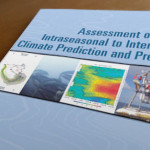
A new report recently released by the National Research Council called “Assessment of Intraseasonal to Interannual Climate Prediction and Predictability” examines the current state of climate forecasting over time periods of a few weeks to a few years, and makes suggestions on how these forecasts might be improved. The International Research Institute for Climate and […]
By Stephen Zebiak As I wrote in the previous installment, climate risk management is a process that informs decision making through the application of climate knowledge and information. IRI’s approach to climate risk management consists of four components. The first is identifying vulnerabilities and potential opportunities posed by climate variability or change in a given […]
by Stephen Zebiak We live in a time of rapidly escalating concern about climate change. Although scientific evidence on climate change has been steadily building over many years, only recently has the consensus concerning observed impacts and future scenarios reached a level to capture the world’s attention. Increasingly, the question of whether or not climate […]
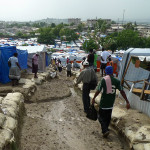
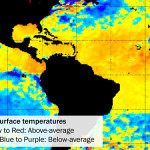
by Eric Holthaus The Atlantic hurricane season has officially started, and the International Research Institute for Climate and Society has issued its updated seasonal hurricane forecast for the region. The results continue to indicate that an above-normal season is very likely. This could spell trouble for highly vulnerable Caribbean nations such as Haiti, still reeling […]
For the third year in a row, public-health professionals and climate scientists from around the world are visiting Columbia University’s Lamont campus, where the International Research Institute for Climate and Society is based, to learn how to use climate information to make better decisions for health-care planning and disease prevention. They’re taking part in the […]
Climate-related disasters can have a devastating impact on human life and development. Globally, climate events including floods, droughts, cyclones, heat waves and mudslides contribute to tens of thousands of deaths, hundreds of thousands of injuries and billions of dollars in economic losses each year. In recent years, it’s become clear that such losses can be […]