Top Stories
NASA and IRI Bring 'Space to Village' in East Africa
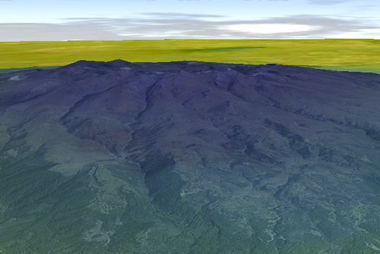
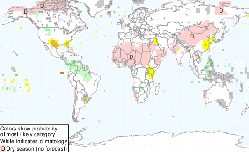
IRI and NASA have been working together for the past five years on developing products derived from remotely sensed images for monitoring climate and environmental factors that affect the transmission of vector-borne diseases. Their collaboration has expanded recently through new activities with SERVIR Africa, NASA’s partnership with the U.S. Agency for International Development and the Regional Centre for Mapping of Resources for Development in Eastern Africa.
Risk of Amazon Rainforest Dieback Higher than IPCC Projects
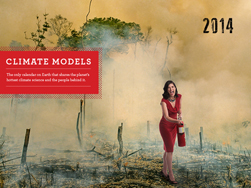
A new study suggests the southern portion of the Amazon rainforest is at a much higher risk of dieback due to climate change than projections made in the latest report by the Intergovernmental Panel on Climate Change. If severe enough, the loss of rainforest could cause the release of large volumes of the greenhouse gas carbon dioxide into the atmosphere. It could also disrupt plant and animal communities in one of the regions of highest biodiversity in the world.
Published & Noteworthy
|
|
|
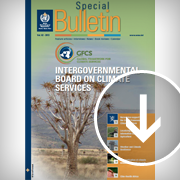
IRI is among 14 founding institutions of the World Health Organization's Climate and Health Consortium for Africa. The goal of Clim-Health Africa is to "strengthen the resilience of African countries and communities by improving management of the effects on public health of climate variability and change and planning for resources to cope with climate-sensitive health outcomes, moving from the current reactive to a proactive mode."
Read more about the initiative in a recent special issue of the World Meteorological Organization Bulletin.
|
|
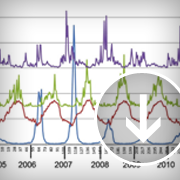
A chapter of a new volume called Climate Science for Serving Society: Research, Modeling and Prediction Priorities describes gobal efforts to prevent and control epidemics of meningoccocal meningitis in Africa through better understanding of the climate and environmental factors that may be influencing them.
IRI's Madeleine Thomson and colleagues write about the MERIT Initiative, launched in 2007 and which brought together health, climate and environment specialists to work on this devastating and neglected disease with a goal of improving vaccination strategies.
|
|
|
|
|